



Guizhou: Openness That Hits Home

17/08/2026 13:00:18 乐邦
 0
0  0
0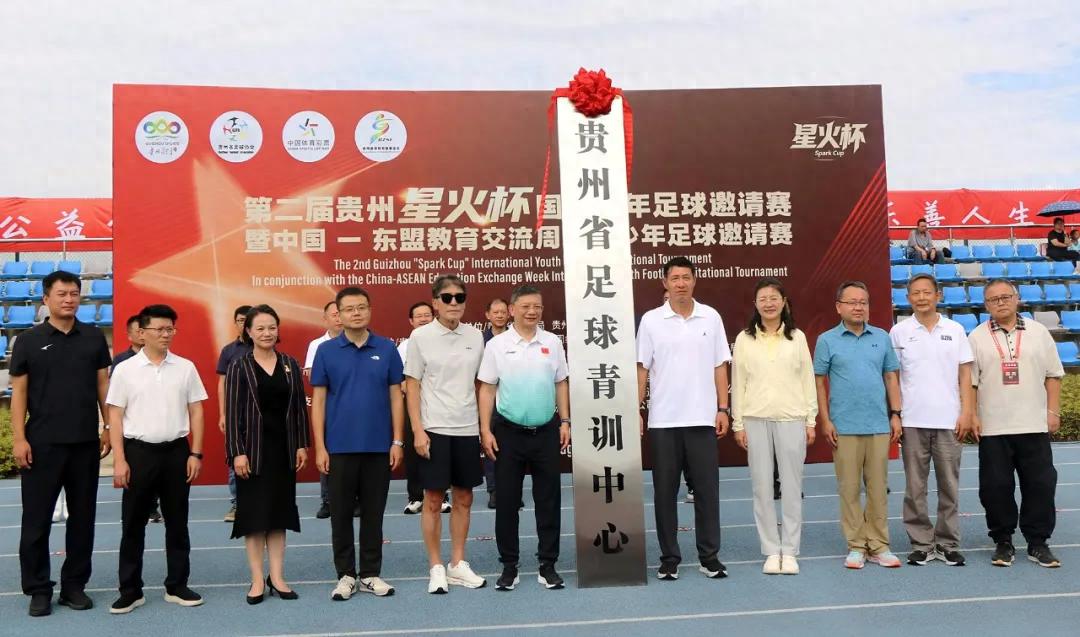
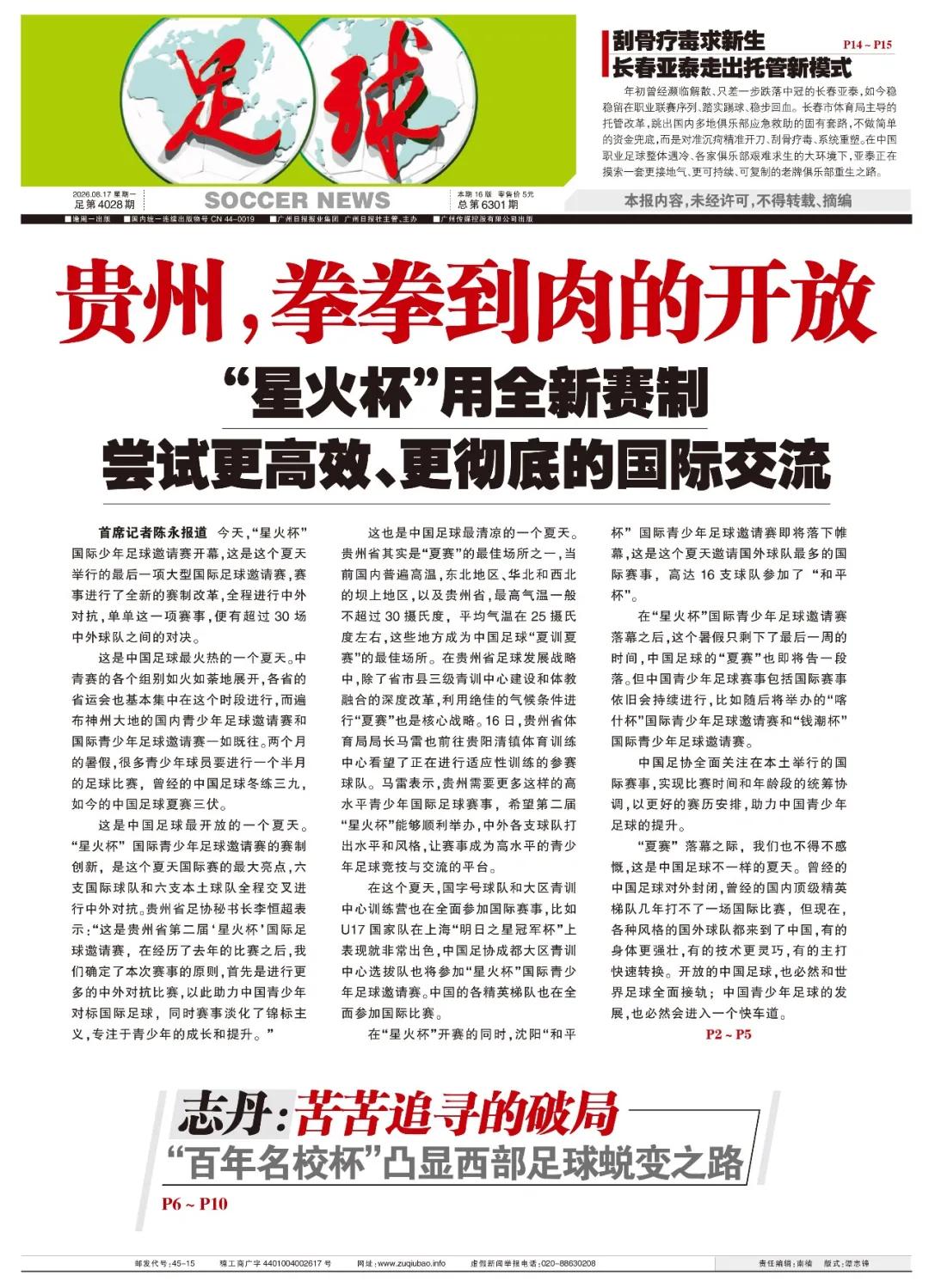
Chief reporter Chen Yong reports This summer, football tournaments are in full swing, with a particular highlight being local international football events. Statistics show that no fewer than ten international tournaments have been held in China over the past two months. This is an openness that Chinese football must embrace: due to the current level of youth football in the country, overseas training programs are difficult to implement widely, and overseas training camps are mostly concentrated at the national team level. Under these circumstances, international football tournaments held on home soil have become the best platform for more young Chinese football players to experience world-class football culture and advanced technical and tactical levels.
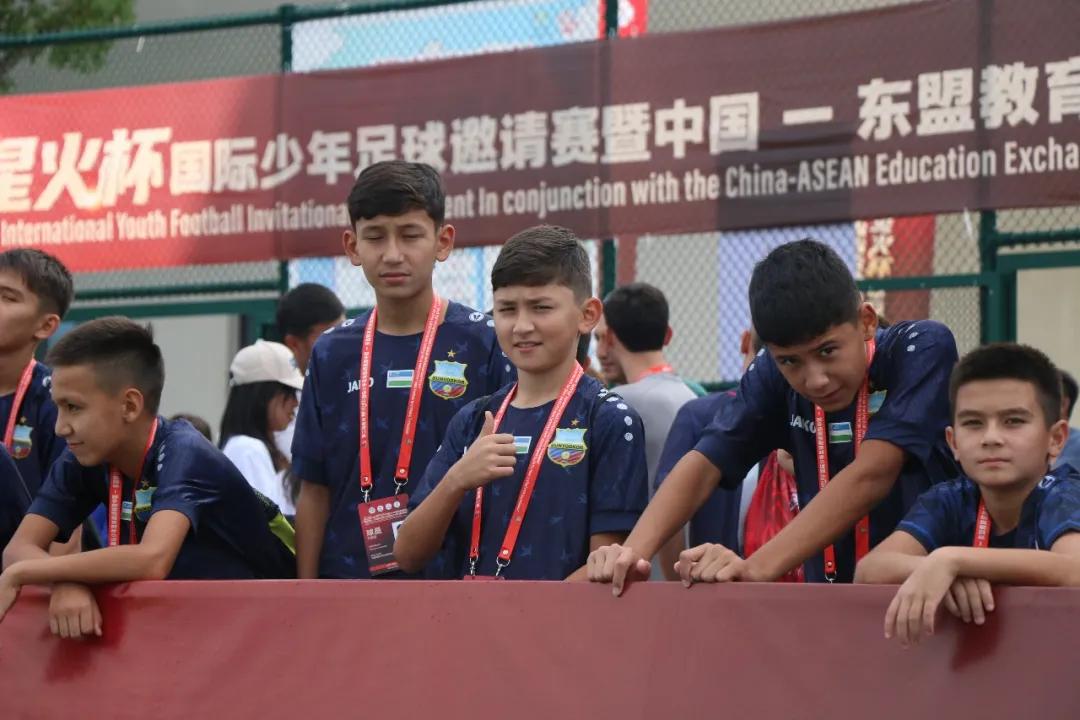
Most international tournaments follow a traditional format. For example, in a tournament with six foreign teams and six domestic teams, the competition consists of three group stages followed by a top-eight knockout round, resulting in only about 13 matches between Chinese and foreign teams out of 26 total games. However, the "Spark Cup" International Youth Football Invitational Tournament, which kicked off today, also features six foreign teams and six domestic teams but adopts a new format, ensuring that over 30 matches throughout the entire event are between Chinese and foreign sides. Everything is focused on Sino-foreign exchanges, and everything is aimed at boosting the level of Chinese youth football.
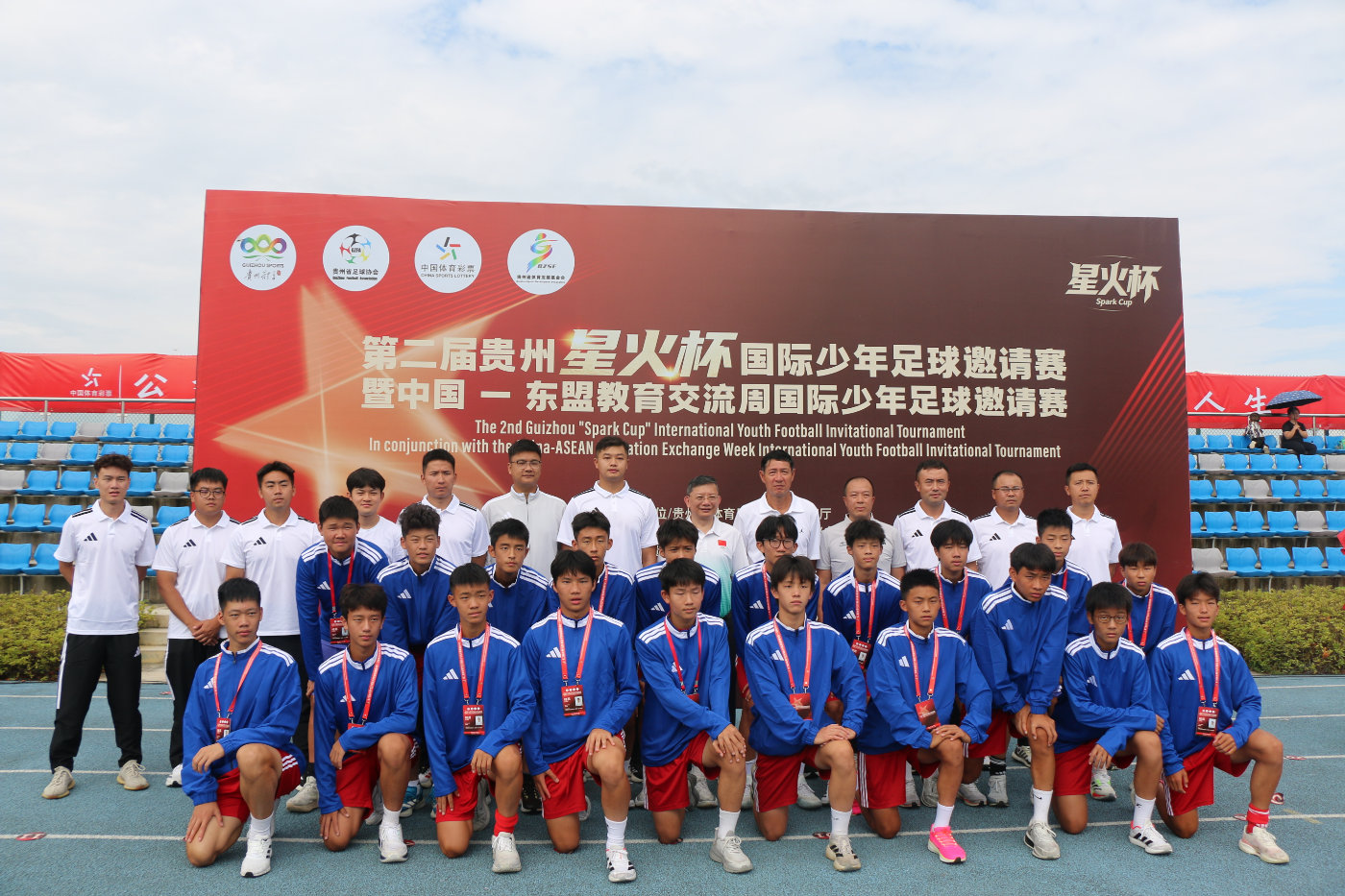
The second "Spark Cup" International Youth Football Invitational Tournament opens, and the Guizhou Provincial Youth Football Training Center is officially inaugurated

At the end of December 2025, a discussion on the format of international football invitational tournaments was held internally at the newspaper *Football*. The tournament in question was the first China-South Korea Youth Football Elite Challenge (U15 age group) held in January 2026. The original idea was to have six Korean elite teams and six Chinese elite teams compete in six rounds of Sino-Korean matches. The initial concept for the "Spark Cup" format was proposed at that time.
However, this concept was not fully realized in the China-South Korea Youth Football Elite Challenge. On one hand, due to insufficient preparation time, the visiting Korean teams numbered four: Incheon United (K1), Seongnam FC (K2), Yongin FC (newly promoted to K3), and Hwaseong (a local FA team). On the other hand, although the domestic participating teams included top elite teams like Evergrande Football School, Shanghai Port, Wuhan Three Towns, Zhejiang Club, and Guangdong Mingtu, other professional club teams and provincial/municipal football associations also showed strong desire to participate. Ultimately, 12 domestic teams took part, all of which were professional club teams, provincial FA teams, or selection teams from training centers, as well as teams from the "two pilot" cities and regions. These teams represent the mainstream level of China's elite youth training.
As a result, the format was adjusted. The tournament consisted of a total of 8 rounds and 64 matches. The first 6 rounds were group cross-matches, where the four Korean teams played a total of 24 matches, and the 12 domestic teams each had two opportunities to face Korean teams. The final two rounds continued the Sino-Korean rivalry pattern, matching teams of similar strength. In the end, the first China-South Korea Youth Football Elite Challenge featured 32 matches over 8 match days that were Sino-Korean clashes. During this period, the Korean teams also proactively invited Chinese teams to play three "unofficial" Sino-Korean matches.
Although the first China-South Korea Youth Football Elite Challenge ultimately set rankings, the format focused on Sino-foreign competition, making the rankings merely a reference. In the end, Evergrande Football School's U15 team ranked first, while K1's Incheon United U15 team ranked second.
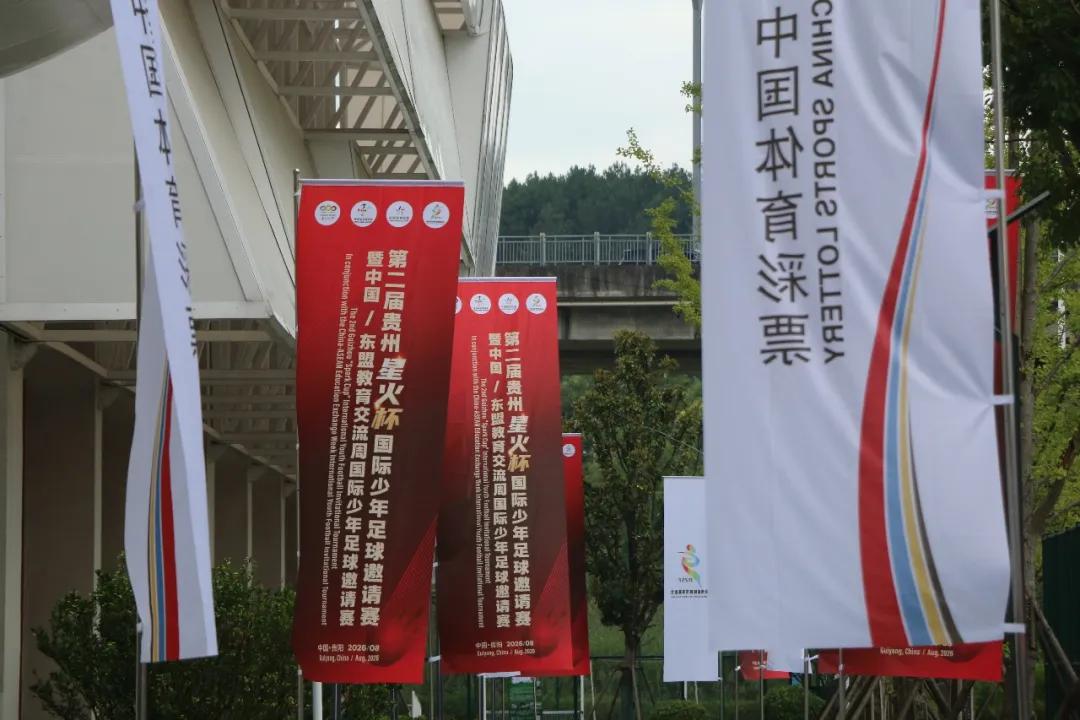

From winter training and winter competitions to summer training and summer competitions, the format that was once not fully realized has finally been achieved in the second "Spark Cup" International Youth Football Invitational Tournament.
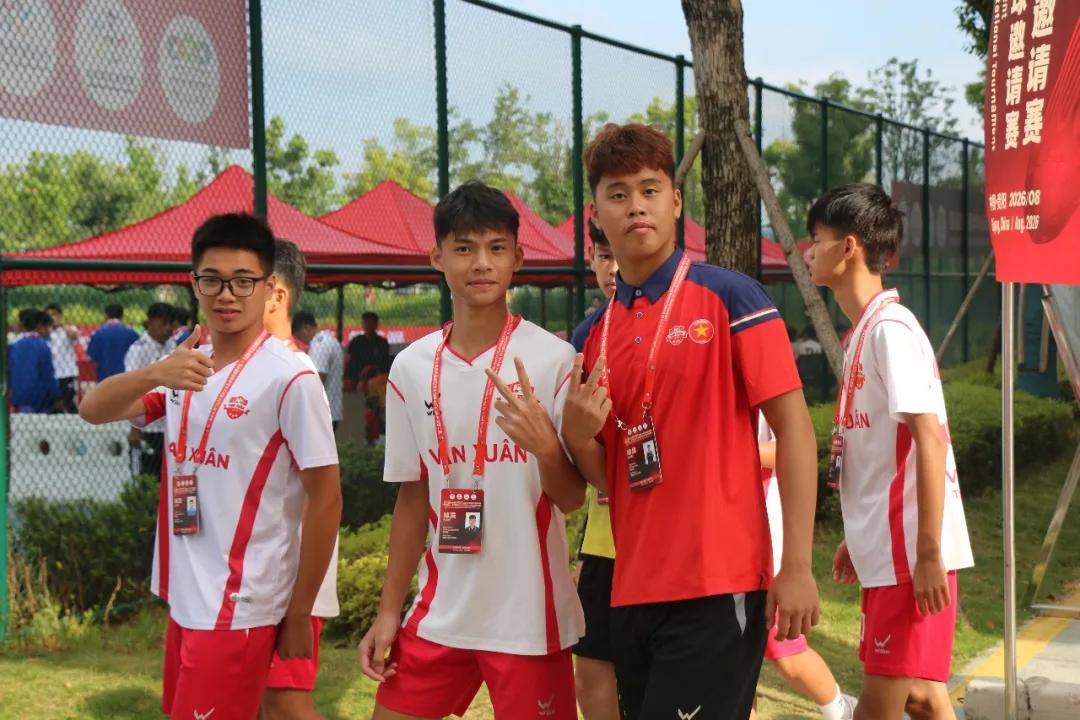
The "Spark Cup" invited six foreign teams: South Korea's Hwaseong City and South Korea's HSFA, both of which are elite teams under the Hwaseong Football Association. Their style is characterized by intense pressing and a fast pace throughout the game, making them ideal opponents for Chinese teams to experience high-intensity, fast-paced matches. Uzbekistan's Tashkent Creators is a top-tier club team from Uzbekistan with an elite youth training system; Khusanov, who joined Manchester City for 40 million euros last year, came from this system. Kyrgyzstan's Bishkek Snow Leopards were transformed from the country's national football academy and function as a quasi-national team. Vietnam's Van Xuan Football Center focuses on youth development and has won national championships. Thailand's Pattaya United was once a Thai League 1 team and is now in Thai League 2, but its youth system is quite impressive. Thailand and Vietnam are also two representatives of the rise of Southeast Asian football in recent years.
China's six participating teams also have their own characteristics: The Chinese Football Association Chengdu Regional Youth Training Center U14 Selection Team is an elite selection team formed by the Chengdu Regional Youth Training Center, based on the Southwest region. The Qingyuan Evergrande Football School U14 team is one of the top domestic elite teams. The Chongqing Football Youth Training Center U14 team and the Guizhou Football Association U14 Selection Team are provincial-level youth training center selection teams. The Bijie City Football Youth Training Center U14 team is a "Western Pilot" youth training center selection team. Sichuan Province Chengdu Huaxi Middle School represents the campus football program.
This edition of the "Spark Cup" downplays the ranking. Only in the final round do the Chinese and foreign groups face off according to their rankings to determine a theoretical order. For 14-year-old boys, ranking is not the most important thing; what matters more is the developmental value of the matches.

During the "Spark Cup" tournament, exchanges between Chinese and foreign coaches will also be arranged, which is a crucial part of international competitions. Through the sharing and exchange of youth training models and philosophies, these activities help local coaches improve and grow.
The exchanges are divided into two themes: The first theme is the "Coaches' Youth Training Sharing Session," which includes three segments presented by the Guizhou Provincial Youth Training Coach Team (including Korean coaches) and two foreign coach teams. All domestic participating team coaches will attend the full session, focusing on sharing and exchanging experiences in youth training, team building, talent selection, integration of sports and education, and training and competition. The second theme invites a chief physician in sports medicine and a professional football rehabilitation specialist to give a talk on "Injury Prevention and Rehabilitation."
This tournament is also a key supporting sports event for the 2026 China-ASEAN Education Exchange Week. Using sports as a medium, it deepens people-to-people exchanges between China and ASEAN, further expanding the boundaries of the Education Week, extending educational cooperation from the classroom to the football field. It helps enhance mutual understanding and friendship among young people from different countries, further boosting the regional influence and international participation of the event. During the international football invitational, the "Spark Cup" women's football matches will also be held concurrently.

In the past two years, rebuilding the youth football training system has focused not only on the core construction of five-level youth training centers but also on reforming the competition system. At the national level, the reform of the national youth football competition system has been completed. The National Games, the Chinese Football Association Youth Football Championship, and the National Youth Three-Ball Games have been integrated. The Championship serves as a preliminary qualifier for the Three-Ball Games (still deciding champions and runners-up), and the results of the Three-Ball Games are incorporated into the National Games. Additionally, the China Youth Football League (CYSL) in 2026 is fully committed to creating a regional league with a home-and-away format, with the next step focusing on expanding the scale and quality of local qualifiers.
The basic principles of the current domestic competition system reform are simple: First, achieve calendar coordination for national, provincial, and municipal youth tournaments, making all events more balanced. Second, on the basis of calendar coordination, focus on building a league system with a home-and-away weekly format within cities, to better align with the growth pattern of youth training and competition.
Third, focus on high-level tournaments, which is a goal in all competition reforms. In fact, China is also exploring new formats. In 2025, Zibo 0533 Football Park, drawing on foreign experience, created a tournament with a brand-new format: the Weekend Championship. Using one day on the weekend, it invites eight elite teams from within a 100-kilometer radius to play a round-robin of seven 20-minute matches in a single day. In this new format, players face seven different opponents in one day, constantly adapting to various playing styles and scenarios, thereby improving their technical and tactical skills and adaptability. Meanwhile, a team plays 140 minutes of football in a day (with a limit on individual player playing time), ensuring that each player gets playing time, which is also a principle of youth development.
Fourth, focus on international youth football tournaments. Currently, the annual goal for national youth teams in younger age groups is to participate in no fewer than 20 international matches. Elite youth academies like Evergrande Football School, Luneng Football School, and Greentown also need to focus on international competitions, theoretically playing at least 15 international football matches per year. At the beginning of the year, during the China-South Korea Youth Football Elite Challenge, Evergrande Football School's U15 team played four international matches. In this "Spark Cup," Evergrande's U14 team is set to play six international matches in a row. Statistics from the five years between 2020 and 2024 show that a top football school had only one of its teams play six international matches, while other teams had none. But now, everything is different.
We can look forward to the fact that as China's youth football tournaments become more diverse and the calendar coordination becomes more reasonable, especially as our children get to participate in more international matches, the level of Chinese youth football will inevitably continue to improve.


Wonderfulshortvideo

mbappe news mbappe edit mbappe new shoe boot deal mbappe nike



julian alvarez barcelona news
James Trafford’s big moment in the U21 EURO final 🤯

RODRI BARCELONA transfer barcelona news today rodri to barcelona transfer here we go
gianni infantino and trump drama news

jorge messi death messi news today football news today
jose mourinho netflix documentary pep guardiola mourinho beef mourinho edit
 Links
Links
 Contact