



CAHN Club and the Measure of Reaching Continental Heights

13/08/2026 16:03:21 直升机
 0
0  0
0The 2-0 win against Adelaide United at Hindmarsh on the night of August 11 did more than just bring Hanoi Police (CAHN) to the AFC Champions League Elite 2026/27 league stage for the first time. Crucially, that historic ticket marks a significant challenge for Vietnamese football's continental aspirations.
Coach Alexandre Polking once candidly stated that if Vietnamese football wants to aim for the World Cup in the future, it must think bigger, invest better, and create an environment where players regularly face top-tier teams. Therefore, CAHN's achievement holds value far beyond a single win or a ticket to the Champions League Elite.
For many years, Vietnamese football has maintained a certain gap with Thailand and Malaysia in terms of building clubs capable of long-term competition at the continental level. Thailand's Buriram United or Malaysia's Johor Darul Tazim do not see the AFC Champions League as a short-term adventure. They invest heavily, build quality squads, have professional operating systems, and proactively set goals to go deep.
That is a very thought-provoking difference. While Vietnamese clubs often have to balance the V-League, National Cup, and regional tournaments like the ASEAN Club Championship, the continental arena is sometimes considered an overwhelming task. Having to travel far, face strong opponents, and consume many resources means not every club has the conditions to pursue long-term ambitions.
But if they continue to shy away from difficulties, Vietnamese football will find it hard to close the gap. CAHN now has an opportunity to change that perspective. The victory over Adelaide United shows that a Vietnamese club can step onto the continental stage with the mindset of a team wanting to compete, rather than just trying to limit losses.
What is noteworthy is that CAHN did not win by luck. Amid the absence of many national team players who are with the Vietnam team for the 2026 ASEAN Cup, CAHN's defeat of the home side in Australia further demonstrates the depth and commendable adaptability of the Vietnamese representative.
This historic ticket also provides CAHN with a special measure of their strength. In the group stage, Dinh Bac and his teammates will have the chance to face top clubs from Japan, South Korea, or China, where world-class players and stars gather. At that point, all of CAHN's strengths and weaknesses will be clearly exposed.
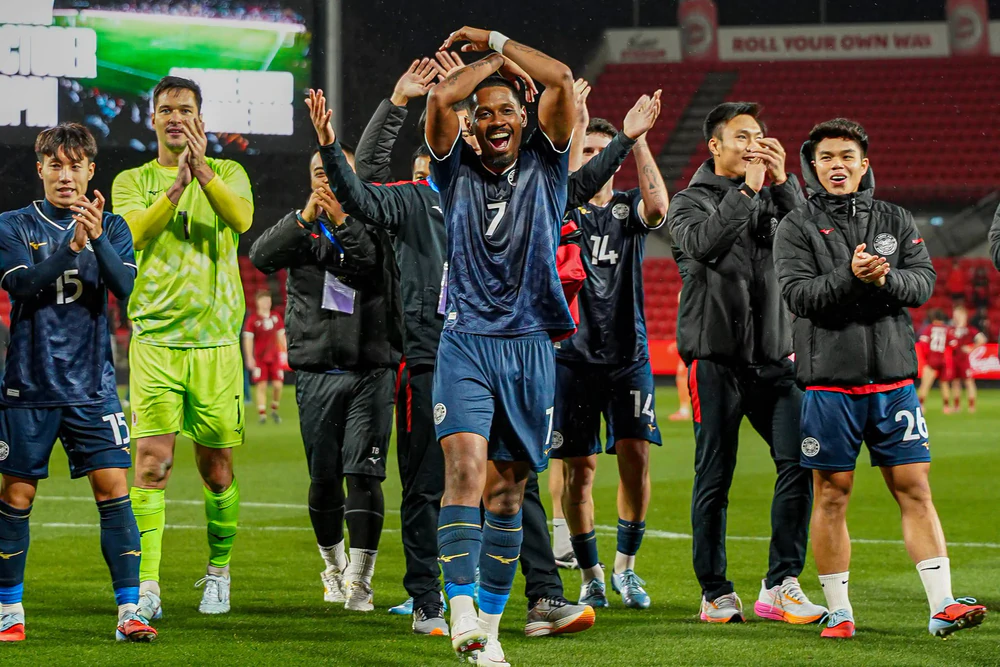
CAHN's upcoming journey in the AFC Champions League Elite will hold great significance for Vietnamese football. Photo: CAHN Club
But that is exactly what Vietnamese football needs. Becamex Binh Duong once defeated a Korean club on the continental stage. Hanoi FC also left their mark with wins over Wuhan Three Towns and Urawa Red Diamonds. Those matches show that Vietnamese clubs are not completely outmatched if they are well-prepared and perform to their full ability.
CAHN has the right to carry on that belief. Furthermore, Vietnamese football will also benefit from this journey. Players experience higher speed, greater intensity, and more pressure. Coaches gain more data to adjust tactics. Clubs have the opportunity to learn about the operation, organization, and investment of more developed football nations.
That is the shortest path for Vietnamese players to no longer feel lost when stepping onto the big stage. Notably, the 2026/27 season also sees Southeast Asia sending five representatives to the AFC Champions League Elite: CAHN, Johor Darul Tazim, Buriram United, Port FC, and Ratchaburi. This is a signal that regional football is advancing through the strength of clubs.
Vietnamese football cannot stand outside that trend. For CAHN, the immediate goal does not necessarily have to be surpassing all Asian giants. What is more important is to play with a competitive mindset, accumulate experience from each match, and clearly identify where they stand.
The reason is that only by stepping onto the big stage can Vietnamese football know the real gap with the top football nations. The World Cup dream also starts from such steps. A strong national team needs good players, but those players also need a sufficiently strong club environment to develop.
And a football nation that wants to go far cannot only have a progressive national team; it must have clubs strong enough to represent the country on the continental stage.
CAHN has opened that door. The rest is how they will walk and how far they can go. But whatever the result, the journey in the Champions League Elite will certainly be one of the most important tests for CAHN, and also a valuable assessment for Vietnamese football's ambition to reach the Asian level.


Wonderfulshortvideo

mbappe news mbappe edit mbappe new shoe boot deal mbappe nike



julian alvarez barcelona news

James Trafford’s big moment in the U21 EURO final 🤯

RODRI BARCELONA transfer barcelona news today rodri to barcelona transfer here we go
gianni infantino and trump drama news

jorge messi death messi news today football news today

jose mourinho netflix documentary pep guardiola mourinho beef mourinho edit
 Links
Links
 Contact